












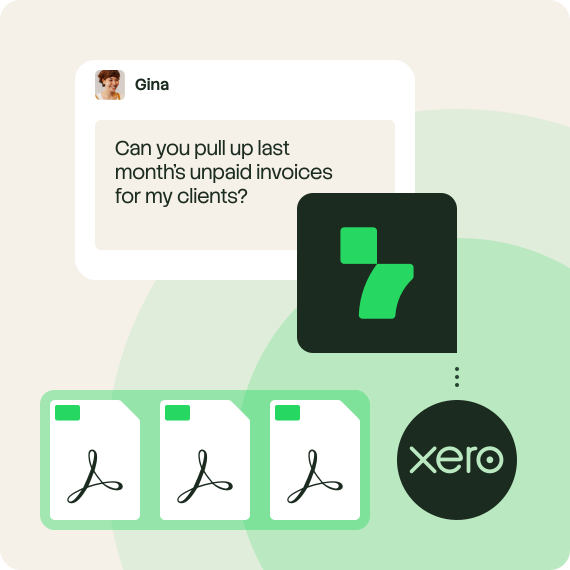
AI that works inside your business
An assistant that can only talk is useful. One that can act is transformational. Echo7 connects to the systems you already use, such as ticketing, CRM, e-commerce, ERP, payments and document management.
Users ask once, in plain language, and Echo7 finds the information or completes the task in whichever system holds it, with no switching between apps.
Connects to the tools you already use
Hundreds of integrations are available across every part of your business.
Ask our assistant whether Echo7 connects to your CRM, online shop or helpdesk.
E-commerce and payments
Shopify, WooCommerce, Magento and Stripe – search products, build baskets and take customers to checkout.
CRM and marketing
Salesforce, HubSpot and Mailchimp – capture leads and keep customer records up to date.
Helpdesk and ticketing
Zendesk, Freshdesk and Jira – open, route and update support requests straight from the chat.
ERP and catalogues
SAP, Microsoft Dynamics and your product feeds – for live stock, prices and order status.
Documents and cloud
Google Drive, SharePoint and Dropbox – new and updated documents feed the knowledge base automatically.
Every channel
Website, WhatsApp, email and API – all powered by the same assistant and the same agents.
How does an agent complete a task?
Every action follows a clear, testable path – from the user’s request to a confirmed result.
01
Request
A user asks in natural language – for example, to check an order or change a delivery address.
02
Parameters
The agent identifies the information it needs and asks the user for anything missing.
03
Action
It calls the connected system securely and carries out the operation.
04
Result
A structured result comes back and the assistant presents it clearly, with any next steps.

Secure, scalable and open
Credentials are managed securely, even across clients or departments. Each agent does one clearly defined job, so every action is testable and reusable, and any agent can be switched on, blocked or replaced at any time.
No development team needed: supply the API or MCP documentation and Echo7 builds the integration and agents for you.
Why Echo7
More than a chatbot. Echo7 responds, decides, guides and acts – combining your knowledge, your data and real actions in one experience, with governed workflows behind every step.
"*" indicates required fields
Ask our assistant
Prefer to ask? Open the assistant and ask how Echo7 would work for you – you’ll get an answer straight away.
Call +44 333 3584 877
We’re here to answer your questions, explore new ideas with you, and help find the solution that best fits your needs.
Get the weekly AI briefing
AI news, practical ideas and Echo7 updates in one short email a week.
Frequently asked questions
Didn’t find your answer? Ask our assistant.
01
Which systems can Echo7 connect to?
Echo7 has hundreds of integrations available, including e-commerce platforms such as Shopify and WooCommerce, CRMs such as Salesforce and HubSpot, helpdesks such as Zendesk, ERP systems such as SAP, payment tools, document management and cloud services.
02
What is an AI agent?
An agent is a specialised capability that performs a specific task, such as finding an order or opening a ticket. It gathers the details it needs from the user, carries out the operation in the connected system and returns a structured result.
03
Can agents be used inside workflows?
Yes. Agents can be triggered directly by a user request or called from a workflow, before the response, after it or as part of a broader process.
04
Are credentials kept secure?
Yes. Credentials and parameters are managed in a controlled way and never exposed in operational packages, and access controls ensure users can only use what they’re authorised to.
05
Can we add new integrations later?
Yes. The platform is modular, so new agents and integrations can be added, changed or switched off over time without redesigning the assistant. And there’s nothing to build yourself: supply the API or MCP documentation and Echo7 builds the integration and agents for you.
06
Do integrations and agents work with private AI?
Yes. Integrations and agents work the same whether Echo7 runs as private AI on your own infrastructure or in Echo7 Cloud, so Echo7 can connect to your internal systems while your data stays under your control. Find out about private AI.
07
What is an AI agent in Echo7?
An agent is a specialised capability built for one job, such as finding an order, checking availability, opening a ticket or updating a record. It works inside the tools you’ve connected through integrations.
08
What is the difference between answering and doing?
An assistant that only answers leaves the follow-up to someone else. With agents, Echo7 can take the next step as well, such as checking a configuration, booking a slot or logging a job the moment a technician confirms a fix, as long as the right integration is in place.